10. LILIES OF THE FIELD
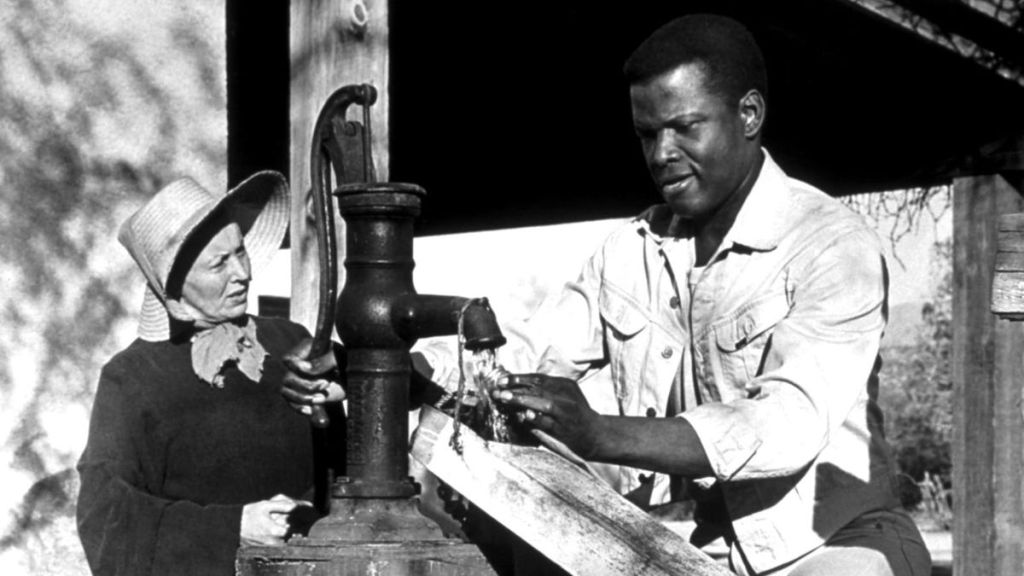
There was no actor better than Sidney Poitier in the 1960s, despite the fact that his only Oscar nomination in the decade was for his performance as Homer Smith in Lilies of the Field. Not only was he nominated, but he also took home his only Academy Award, and became the first black man to win a Best Actor Oscar. It was all well-deserved, as his performance of a hard-working carpenter who agrees to build a chapel in the Arizona desert ranks alongside Poitier’s best work. Poitier, like his character, agreed to work for less than his worth, but he was awarded by an Oscar – and by making another film that stands the test of time.
9. THE BIRDS

Alfred Hitchcock released The Birds as a follow up to his brilliant three-year span where he made Vertigo, North by Northwest, and Psycho, and it must have been considered a bit of a disappointment in comparison. Then again, maybe not, given how it scarred people for life even to this day. By today’s CGI standards, The Birds feels a bit outdated, but at the time it had audience members diving into their seats. One thing that still works today though is The Birds brilliant storytelling. Like his other films, Hitchcock builds suspense in a way that no other director has been able to match to this day.
8. TOM JONES
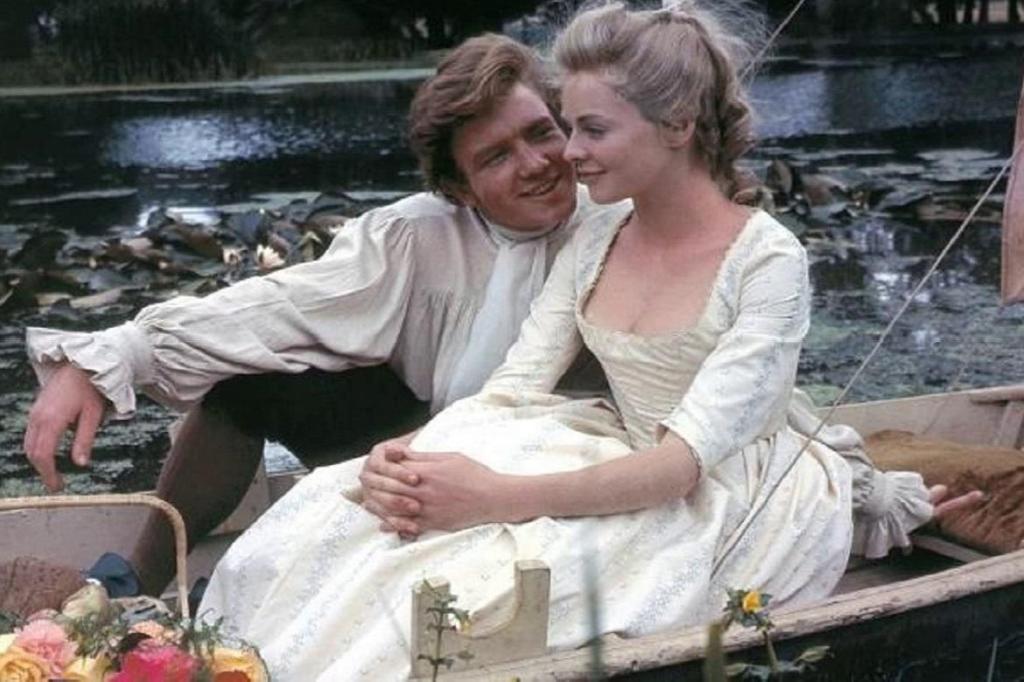
It must have been some shock for Tom Jones – undoubtedly one of the weirdest Best Picture winners of all time – to win the top prize at the 1964 Oscars. Perhaps it’s a sign of how weak 1963 truly was, or perhaps it indicated that movie lovers were ready for more unique films. Tom Jones became the second consecutive British film to win Best Picture – although far less deserving than 1962’s Lawrence of Arabia – by telling the 18th Century story of a charming but disloyal womanizer played by Albert Finney. He carries the film along, and its unusual humor makes Tom Jones a worthwhile watch even today.
7. WINTER LIGHT
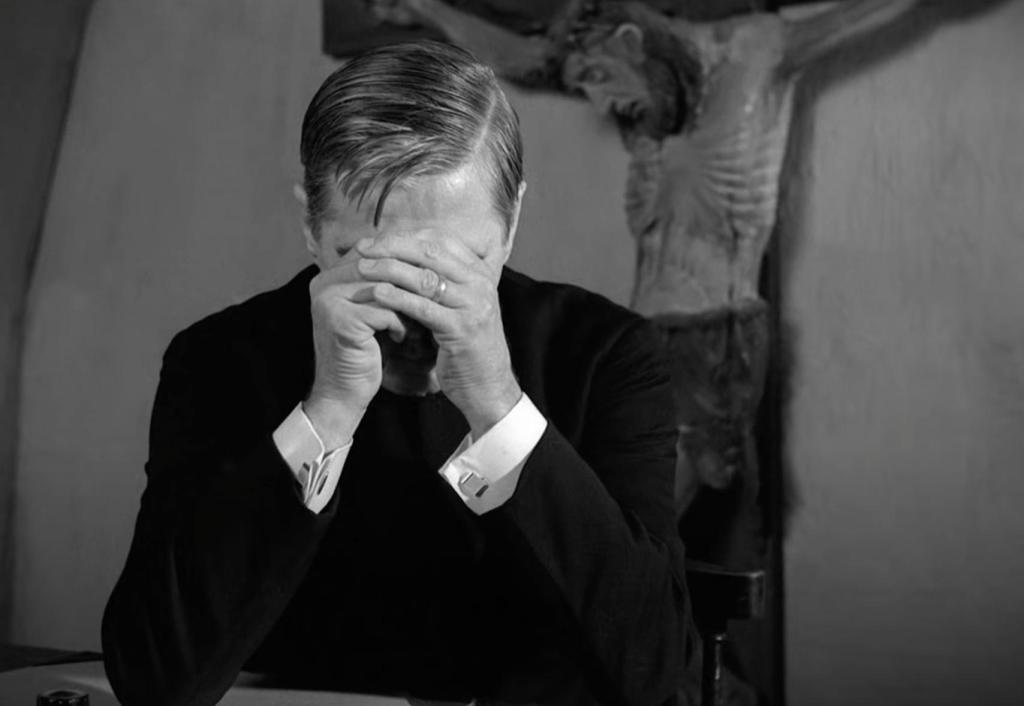
Ingmar Bergman grew up in a strict Christian home, where his father was a pastor. It’s obvious in his storytelling – especially in Winter Light – what a profound impact this had on his life. In Winter Light, Begman tells the story of a pastor who struggles with his faith after he is unable to help a parishioner’s bout with depression. Admittedly, Bergman’s films are always challenging, but Winter Light remains one of the most challenging of his pictures. Perhaps that’s why it deserves a spot on this list?
6. CONTEMPT
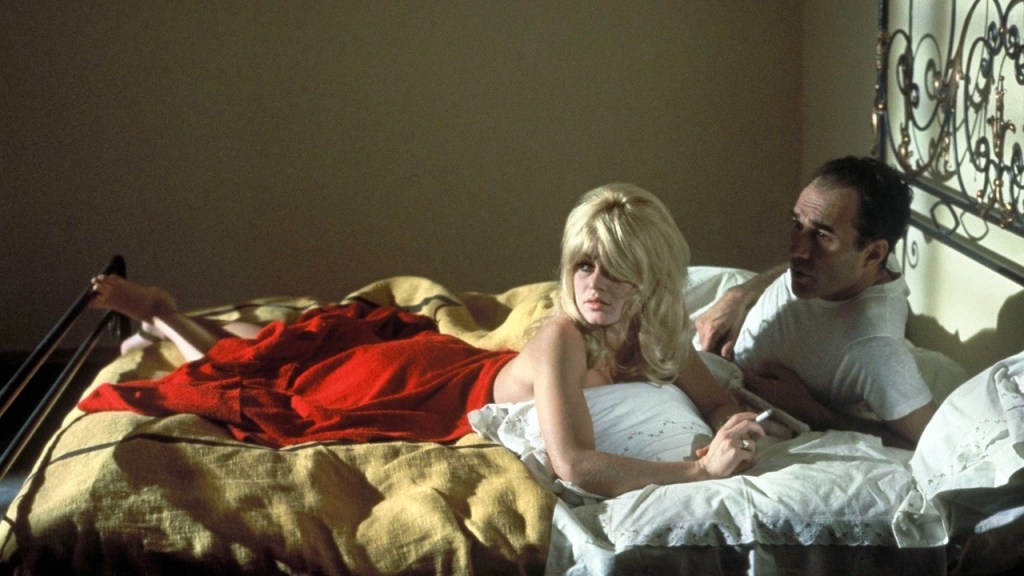
Jean Luc-Godard hated pretty much every film he ever saw that was made after 1960, including the works of Martin Scorsese. Yet, Scorsese has praised Luc-Godard for the impact that he had on many of his films, including Scorsese’s favorite Luc-Godard film, Contempt. I mostly agree with Scorsese; Contempt is the most visually stunning film of Luc-Godard’s career, and one of the most interesting. It tells the story of a screenwriter who’s marriage crumbles during the film’s production. Fortunately, the film does not, as it became one of Luc-Godard’s most successful and most accessible films.
5. 8 1/2
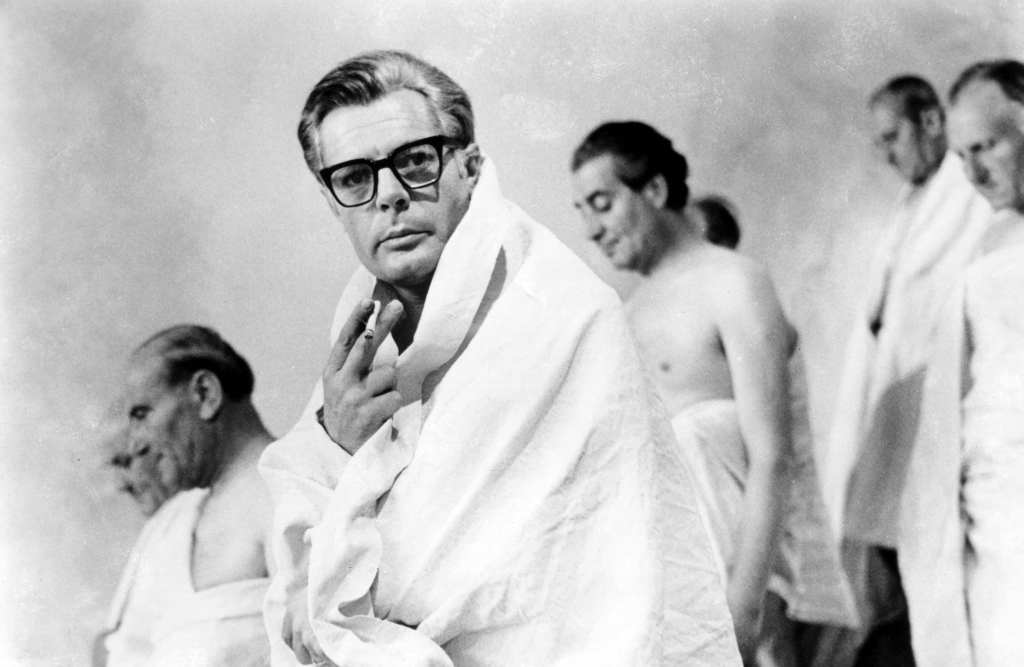
If 846 Sight & Sound voters felt that Federico Fellini’s 8 ½ deserves to be called one of the ten greatest films of all time, who am I to leave it out of my ten best list for 1963? Surely I don’t appreciate the works of Fellini as much as most cinephiles, but I too can appreciate his most imaginative films like 8 ½. Filmed with brilliant cinematography and not a second of bore, 8 ½ is a film that’s impossible not to appreciate, and is somewhat even easy to enjoy. But one thing is always evident with 8 ½, and that is that it was made by a true master of the art form.
4. IRMA LA DOUCE
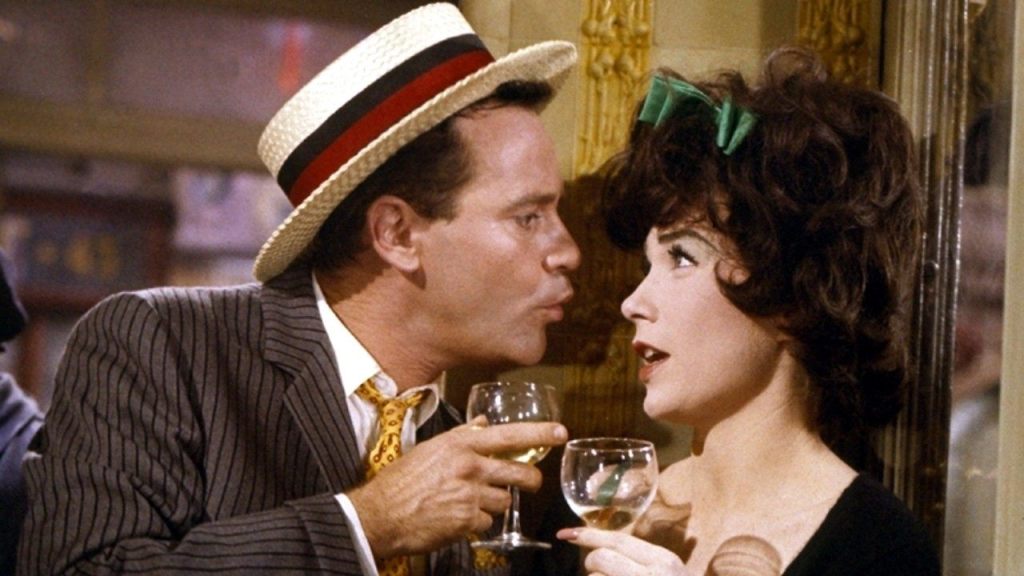
Released just three years after The Apartment, Irma La Douce reunited Billy Wilder, Jack Lemmon and Shirley MacLaine and instantly set the bar to unreachable heights even before its release. And, obviously, Irma La Douce fails big time when compared to their earlier collaboration. However, when taken on its own, Irma La Douce is a very funny, sweet, and creative romance with its only failure being a 157-minute runtime. It tells the story of a policeman who falls in love with a sweet-hearted prostitute, and is willing to do anything to keep her to himself – even if it means sleepless nights, being penniless, and creating a bizarre alter-ego. Wilder has many masterpieces, and Irma La Douce certainly isn’t one of them – but it is still much better than the films of so many lesser directors of the time.
3. HIGH AND LOW
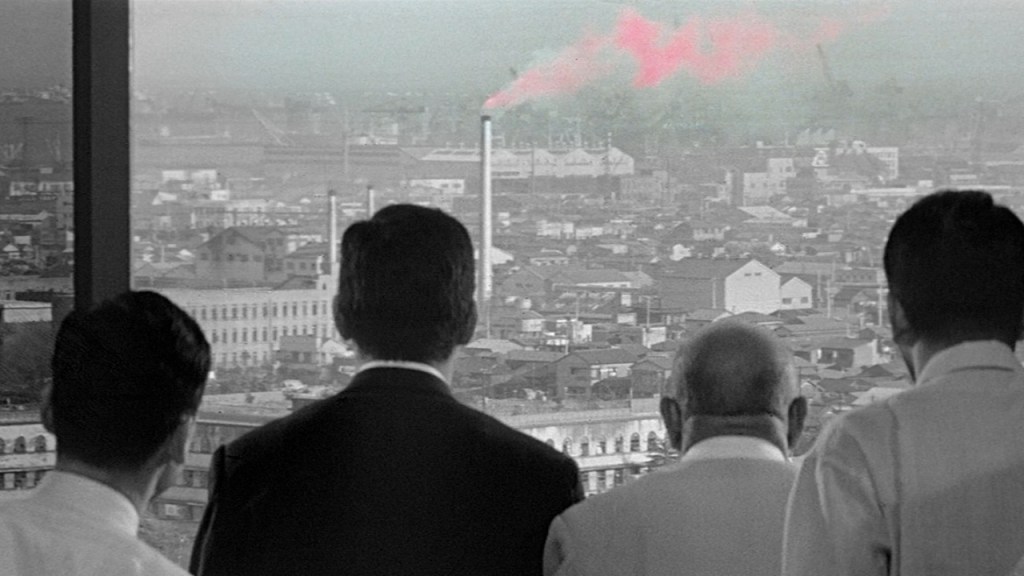
Despite being best known for his Samurai films, my favorite Akira Kurosawa film leaves the samurai swords at home. Instead, High and Low relies on an incredible screenplay that tells the story of a wealthy executive who is forced to make a challenging decision when his chauffeur’s son is mistaken for his own, and kidnapped with hopes of receiving a hefty ransom payout. At 143 minutes, High and Low isn’t a slight film, but it’s also one that doesn’t have a minute of wasted time, as it entertains the audience and challenges their morals.
2. CHARADE

Although it may not be as memorable as Alfred Hitchcock’s North By Norhtwest, a film that Charade seems to want to be, Stanley Donen’s film still has plenty of suspense and charm. And how could it not have an abundance of charm when it stars two of the most likeable leads in film history: Cary Grant and Audrey Hepburn. Grant even was quoted saying that all he wanted for Christmas was to make another movie with Hepburn. Unfortunately, they never reunited for another film, but nobody can deny that their solo joint venture was one of the few standout films from 1963.
1. IT’S A MAD MAD MAD MAD WORLD
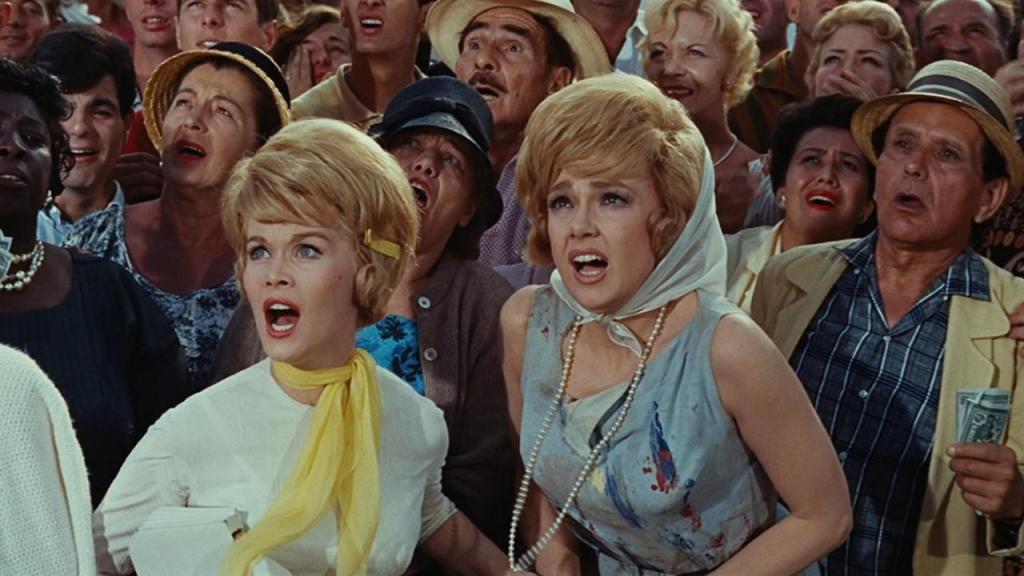
For the slapstick comedy that it is, It’s a Mad Mad Mad Mad Mad World captures a lot of truth about greed and the chase for wealth in America. So much so, that I feel it is the rare comedy that deserves to be named the movie of the year. Especially in a year that was as cinematically weak as 1963 was. Stanley Kramer, whose previous films included Inherit the Wind and Judgement at Nuremberg, proved that he could do more than just courtroom dramas as he tells the story of five motorists who discover that there may be $350,000 buried “under a big W” in Santa Rosita State Park. For a rather quick three and a half hours, we are entertained by these comic book characters as they try to undermine one another and capture the loot themselves. It’s a Mad Mad Mad Mad World is often very funny and is never less than entertaining, which is more than what I can say for any other film released in a rather mediocre year, especially for American cinema.
 Entertainment Yearly