10. PLATOON

The fact that Apocalypse Now didn’t win Best Picture and Platoon did is a testament to the deterioration in quality in movies over a seven-year span. Yet, given the films that it was up against, it’s also easy to see why an anti-war movie with a simple message was awarded the top prize. After all, there’s plenty to like about Platoon and it all starts with the film’s writer and director. Oliver Stone served in the U.S. Army during the Vietnam War, and he clearly feels that it was even more of a mess than we ever knew. Early on in the film, Chris (played by Charlie Sheen) realizes that they’re going to lose the war. After all, the soldiers in Stone’s Vietnam were a mix of uneducated high school dropouts, drug addicts, and psychopaths. In other words, we were far from the greatest generation that fought in previous wars.
9. THE GREEN RAY
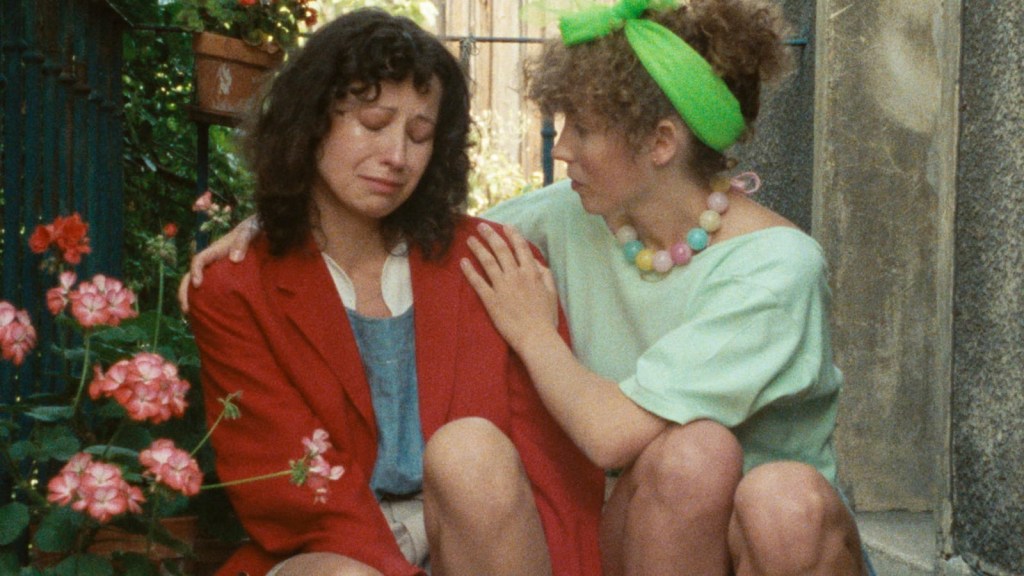
By the time Eric Rohmer directed his fifth film in his Comedies and Proverbs series, he had already proven himself a master of relationship dialogue. But that fifth film was different – it was about a single woman who demands more from a partner and is patient enough to remain single until she finds someone who meets those demands. Delphine is a single twenty-something who dreams of going on a summer holiday, but dreads the thought of going alone. She’s smart and attractive, but has little desire to flirt with the men who don’t live up to her standards, and suffers from loneliness because of her standards. Rohmer has a way of putting humanity on film, and The Green Ray is one of his best films. Like Delphine, it’s smart, patient, unique and tender, and deserves to be noticed.
8. DOWN AND OUT IN BEVERLY HILLS
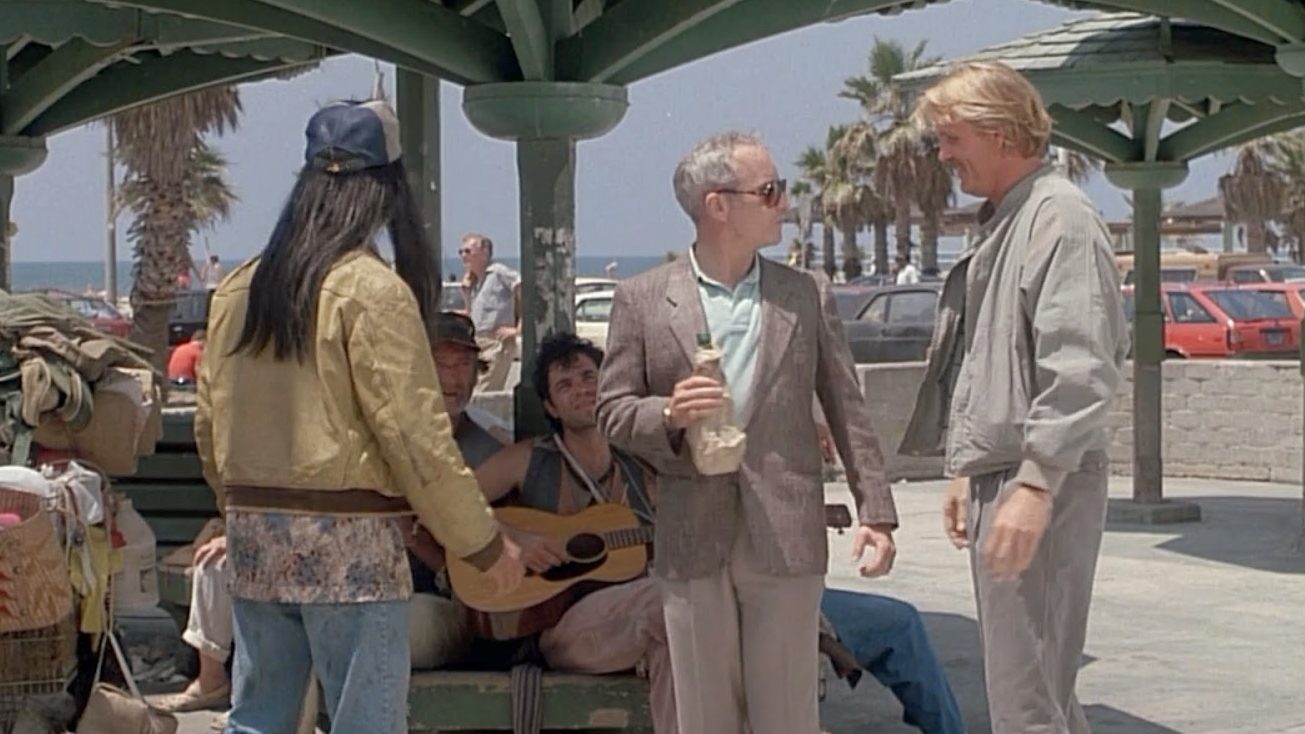
Throughout the 1970’s, Paul Mazursky could do no wrong, in the eyes of movie critics, but by the time Down and Out in Beverly Hills was released in 1986, the praises had stifled. But in the eyes of this fake movie critic, Down and Out remains one of the director’s best films. It tells the story of a very rich business owner who finds a homeless man trying to drown himself in his pool. What follows is a revelation – what if we tried to understand those who are struggling, regardless of their social or economic class? Well, in Mazursky’s world, all hell breaks loose, but in a very funny way.
7. ALIENS

First things first: Aliens does not deserve to be in the conversation of movies where the sequel is better than the original. Let’s leave that praise to worthier films, like The Godfather, Part II, Mad Max 2, and perhaps The Color of Money. Yet, Aliens still has moments of greatness – some that make you jump, some that make you cheer, and many that make you realize that Ellen Ripley may be the bravest heroine to ever come out of Hollywood. But it also takes a lot of luck to escape a villain as invincible as the Alines in James Cameron’s follow up to The Terminator. Aliens may make us sacrifice practicality, but it’s a small request for a film that boasts so many unforgettable images.
6. THE FLY
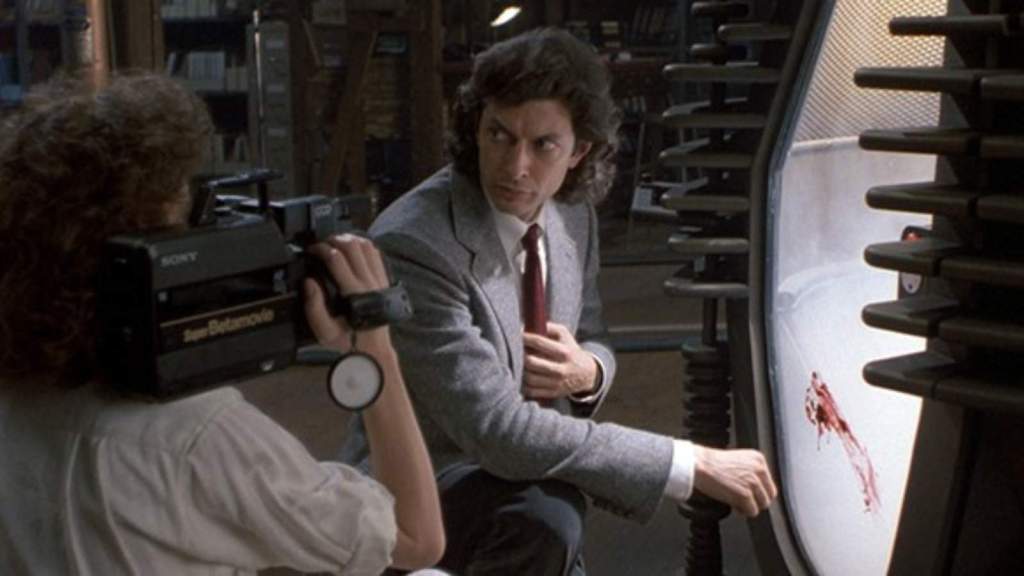
Ask me what my least favorite film genre is and I’d almost surely say body horror, yet there’s no denying that David Cronenberg’s The Fly is one of the most fascinating and original films the genre has ever produced. So much so, that even a hater of the genre must admire its creativity and countless unforgettable scenes. It tells the story of a brilliant mad scientist named Seth Brundle, who slowly transforms into a human fly after an experience goes awry. At first, the side effects are cool as we watch Brundle climb walls, but it’s not long before his body decays and he’s left searching for a solution. Cronenberg is undoubtedly one of the most unique voices in cinema history, and The Fly captures him at his absolute strangest, but also at his best.
5. CHILDREN OF A LESSER GOD
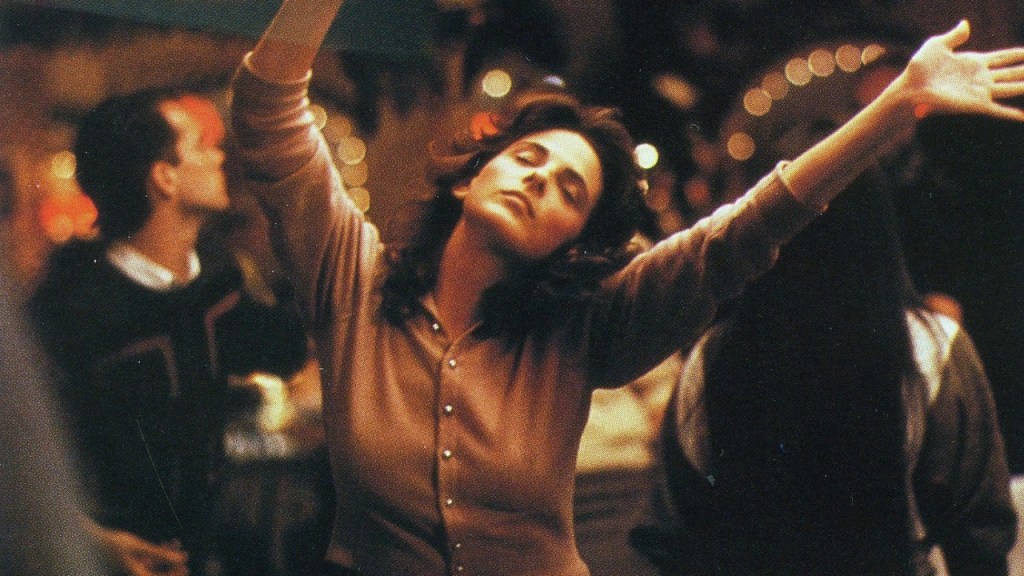
Hands down, the best scene of any movie in 1986 was the scene where Sarah dances to the vibrations of The Staples Sisters’ “I’ll Take You There.” More than any other time during Children of a Lesser God, this is the moment where Sarah speaks to audiences. We learn about her passion, about her softness, and her pain. Randa Haines’s film – really her only noteworthy one – is a flawed film that has plenty of peaks, and two of the year’s best performances. William Hurt, quite arguably the best actor of the 80s, gives one of his finer performances. Yet, it’s Marlee Matlin matches Hurt’s performance in every way, and earned a well-deserved Oscar for her role. Unfortunately, she’d have to wait 35 years to receive another noteworthy opportunity, when she was cast in CODA. Children of a Lesser God is a reminder of how much talent is forfeited when Hollywood refuses to write roles for talented actresses with disabilities. Children of a Lesser God, like CODA, is one of the few to break that mold, and it proves how great a movie can be when it thinks outside the box.
4. HANNAH AND HER SISTERS
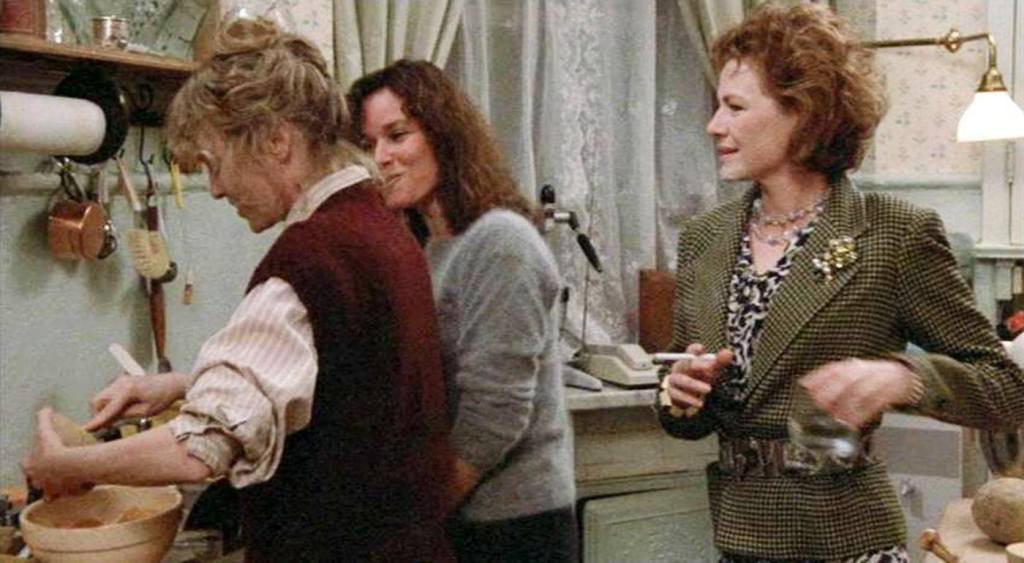
After the release of Annie Hall, Woody Allen clearly wanted to shift to telling stories that he found more important. Yet, his better films remained the ones that were more lightweight, like Manhattan and The Purple Rose of Cairo. Perhaps the one exception, however, was Hannah and Her Sisters, a film that critics adored when it was released in 1986. And I do, too. Sure, it’s not tier one Woody Allen, but it is a film that is far better than it has the right to be, given that it really is a family soap opera at heart. As the title suggests, it tells the story of Hannah, a successful playwright, and her two less successful sisters. One of them, Lee, is a recovering addict who is having an affair with Hannah’s husband. Meanwhile, Woody Allen can’t help but to write a role for himself, as he plays Hannah’s ex-husband, who she still remains friends with. Don’t get me wrong – Hannah and Her Sisters is a far cry from Allen’s masterpiece, Annie Hall. Yet, it remains one of his great films, and perhaps his last truly great film before his resurgence in the mid 2000’s.
3. THE COLOR OF MONEY

Released the same year as Aliens, a film that is often considered one of the great sequels of all time, Martin Scorsese’s The Color of Money doesn’t get praised enough as one of the great movie sequels of all time. In fact, as this ranking insists, The Color of Money is far superior to Aliens, in my humble opinion. In it, we meet up with Fast Eddie Felson, the character that Paul Newman made iconic 35 years earlier. He’s no longer the cocky young pool shark, but instead a wise business man with an eye for talent. After discovering Vincent (Tom Cruise) at a dive bar, the two team up to make one last pool hustle. And, in doing so, they bring back the thrills of The Hustler. The Color of Money is smart and entertaining, and it’s the best sequel of the 1980’s. Sorry, Aliens.
2. STAND BY ME
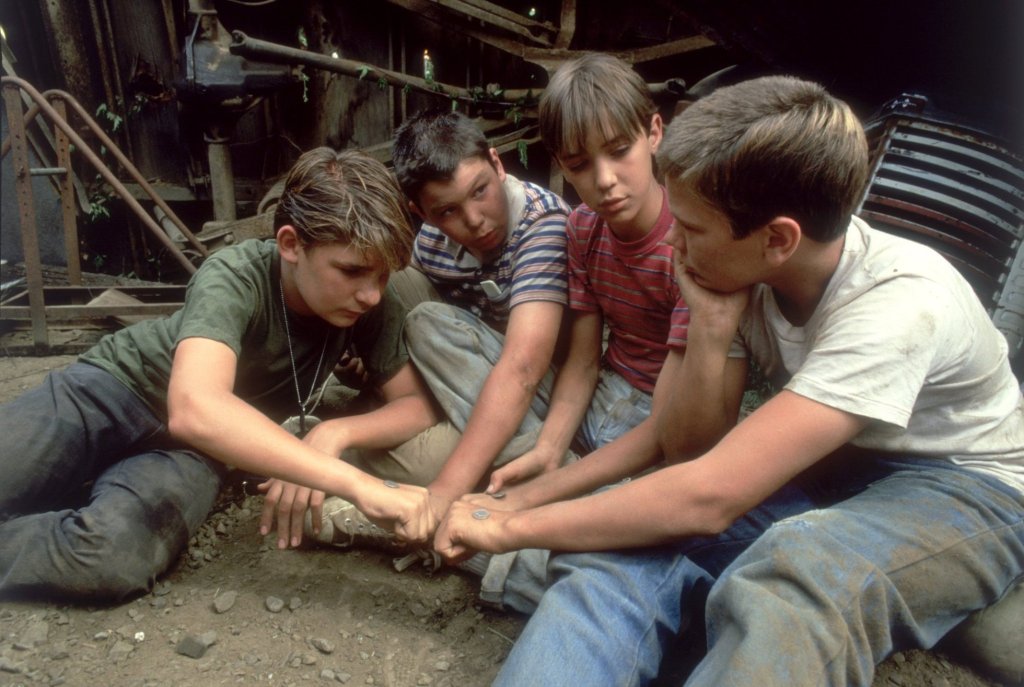
Of all the movies made about children throughout the 80s and the 90s, few are better – or better acted, than Rob Reiner’s Stand By Me. It tells the story about four 12-year-old boys who go searching for adventure after overhearing about the location of the body of a missing person. Reiner, who made a string of hits in the eighties that included This Is Spinal Tap, The Princess Bride, and When Harry Met Sally, does everything right as a director other than keeping that pesky voiceover rolling throughout the film’s 89 swift minutes. Yet, Stand By Me is a film where the great moments clearly outshine its flaws. It’sis a story about losing the innocence that makes childhood so great, and discovering the evils of the world. But it’s also a love letter to the times when we held on that innocence, and were able to roam around with friends all summer, as if it were a 90-day weekend.
1. BLUE VELVET
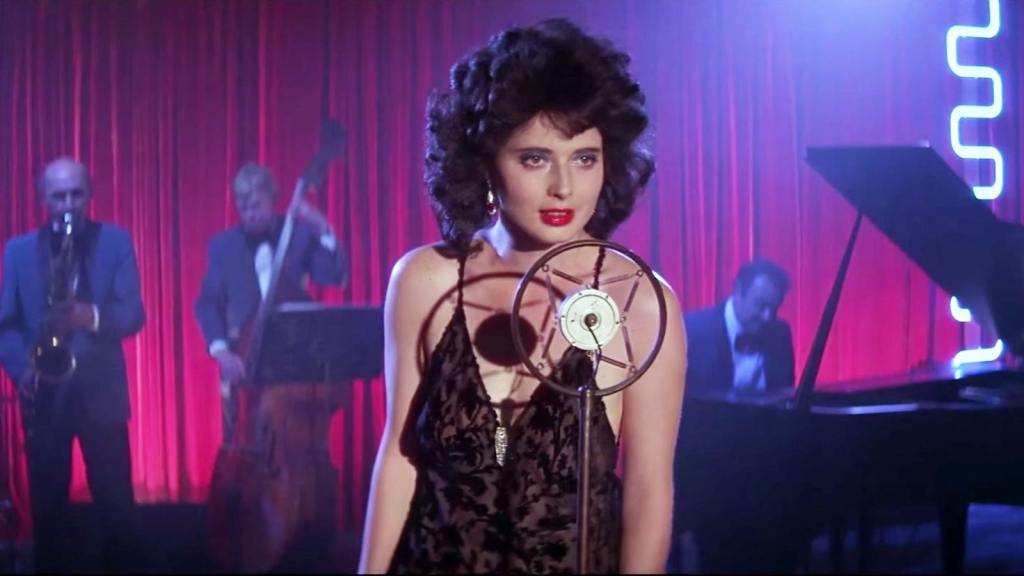
After the success of Eraserhead and The Elephant Man, David Lynch was given the opportunity to direct his first big budget film: 1984’s Dune, which had a whopping budget of $45 million. The result was a complete critical and box office failure that resulted in Dune 2 getting scrapped, and instead allowing Lynch to create a much more personal film, which would be called Blue Velvet. Although Eraserhead and The Elephant Man weren’t exactly easy watches, they’d feel as innocent as Sesame Street compared to Blue Velvet, which told the story of a young mother who is brutally abused by a psychopathic drug lord. The film is so disturbing, that Roger Ebert panned the film, calling it “disturbing” and “campy.” It certainly is disturbing and one of my least enjoyable viewings of 1986. But it’s also the only film that got my heart-pounding and, for better or worse, the one that remains sketched in my brain, haunting me like those nightmares I’d have as a kid. And for that, it’s actually quite special.
 Entertainment Yearly