10. EDDINGTON
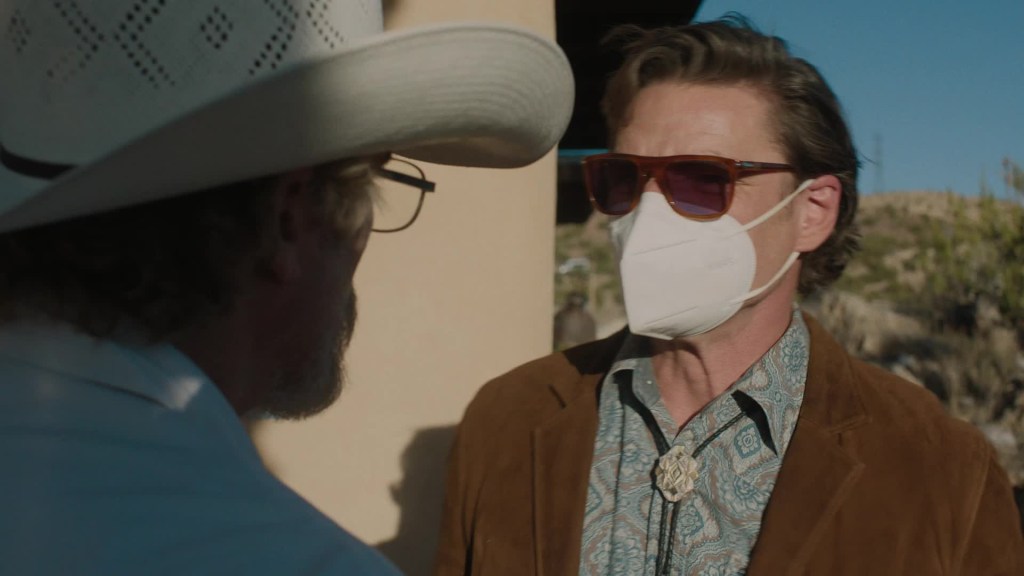
When Eddington premiered at Cannes last May, critics weren’t particularly kind — and honestly, that reaction makes sense. Ari Aster’s COVID‑era thriller is far too layered, too strange, and too thematically dense to unpack in a single overnight review. This is a film that needs time to settle, and once it does, its ambitions become much clearer.
Aster drops us into a small New Mexico town under lockdown. Masks are required, but enforcement is nonexistent — largely because the town’s sheriff, played with weary perfection by Joaquin Phoenix, is the loudest opponent of the mandate. His solution? Run for mayor on a “no mask” platform in the upcoming election. It’s a sharp, unsettling setup, and for a while the film executes it brilliantly.
Then comes the final hour, where Eddington spirals into a chaotic, almost disorienting mess. But that chaos may be the point. Aster has said in interviews that the film is ultimately about how big businesses will do whatever it takes to keep profits flowing, no matter the human cost. Seen through that lens, the disorder feels intentional — a reflection of a world where suffering is background noise to corporate ambition. Eddington is messy, divisive, and undeniably bleak, but it captures the anxiety of the pandemic year with almost painful accuracy. And like the pandemic itself, this is a film that won’t be easily forgotten.
9. SORRY, BABY
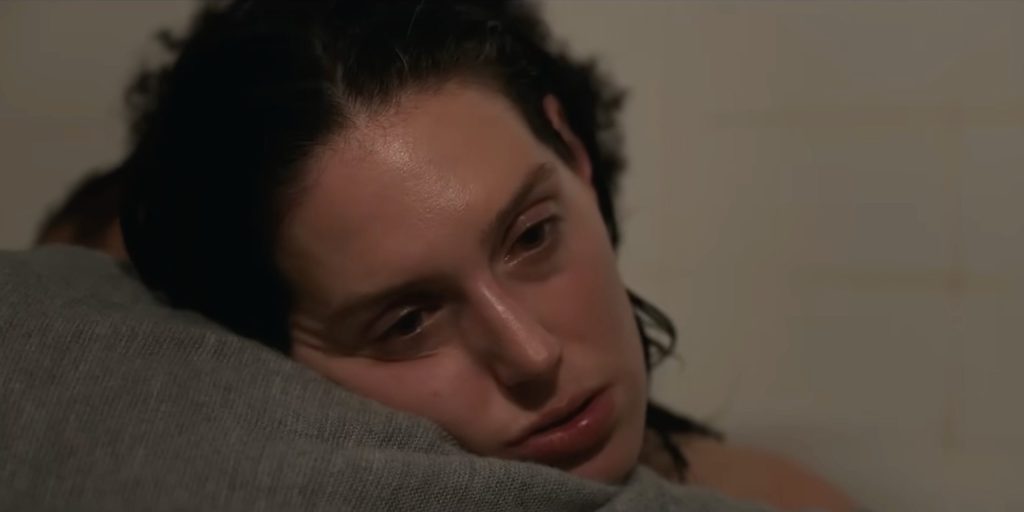
A film tackling a subject as serious as rape probably shouldn’t be as funny as Sorry, Baby often is. And yet, somehow, Eva Victor makes the humor feel not just appropriate but essential — as if the laughter is part of the therapy. As an audience, we need those moments of levity to survive the weight of what she’s showing us.
Like a good sandwich — which is fittingly included in the title of one of the film’s chapters — Victor layers slices of humor between moments of profound sadness and visceral fear. She tells the story of Agnes, a young graduate student raped by her seemingly charming professor, an incident that will haunt her for the rest of her life. It’s a tragedy no one around her can fully understand, and Victor captures the pain, embarrassment, anger, and daily struggle that follow with unflinching honesty.
Sorry, Baby also magnifies the world’s lack of understanding — sometimes through exaggeration, but always with purpose. When Agnes reports the assault to the university’s disciplinary board, the staff responds with a dismissive, “We get it. We’re women,” before brushing her off entirely. I’d like to believe no real board would behave that way, but the moment works because it underscores a painful truth: we often have no idea what the Agneses of the world endure, and we rarely stop to consider the invisible battles being fought by the stranger sitting next to us on a plane.
For a brief moment, Sorry, Baby forces us to pause and think about those around us — their pain, their resilience, their unseen giants. And if that alone isn’t enough to call it one of the year’s best films, I’ve got two words for you: Sorry, Baby.
8. IF I HAD LEGS I’D KICK YOU
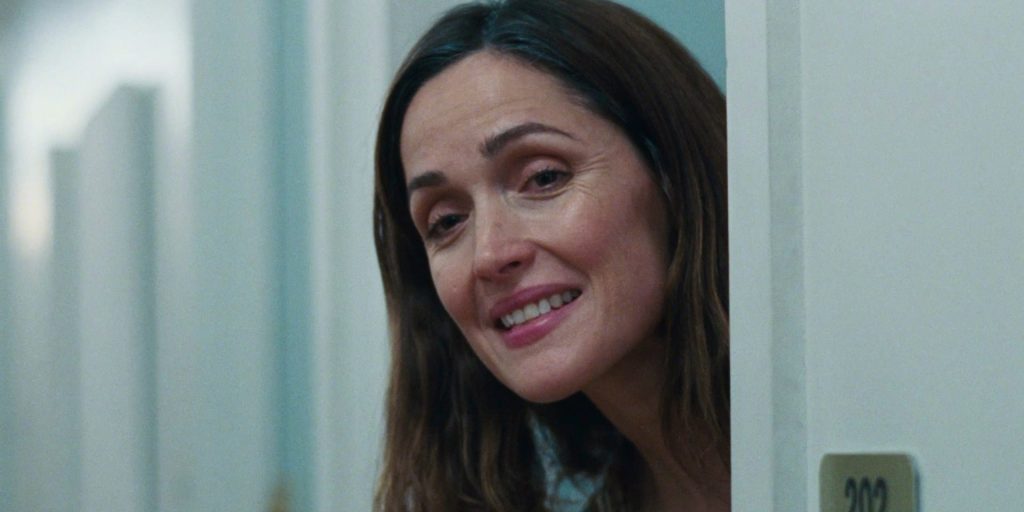
Sure, Jessie Buckley is almost certainly going to give an Oscar speech for Hamnet, and it’s a performance fully deserving of awards. But as Buckley’s performance has faded a bit from my memory, I simply can’t shake Rose Byrne’s work in If I Had Legs I’d Kick You. From the opening moment — the shock of discovering her apartment flooded — to the unforgettable final shot of her crashing into the angry Pacific waves, Byrne delivers a performance that’s as exhausting as it is mesmerizing.
She plays a woman drowning in unmanageable circumstances: a verbally abusive husband who won’t stop calling, a daughter battling a life‑threatening condition, and a hotel clerk who refuses to sell her the one thing she believes might numb the pain: booze, and loads of it. It’s a portrait of someone pushed so far to the edge that even the smallest indignity feels catastrophic.
The Golden Globes boldly labeled the film a comedy — and maybe it would have played that way if Byrne weren’t so committed, so raw, and so heartbreakingly. Instead, she transforms it into something far more important: a story where we feel every ounce of her desperation and root fiercely for her to claw her way out. Not bad for an actress who once seemed destined to be typecast in roles as the snobby, rich sister‑in‑law. No offense to Bridesmaids — still her best film — but her second‑best is undoubtedly If I Had Legs I’d Kick You.
7. WEAPONS
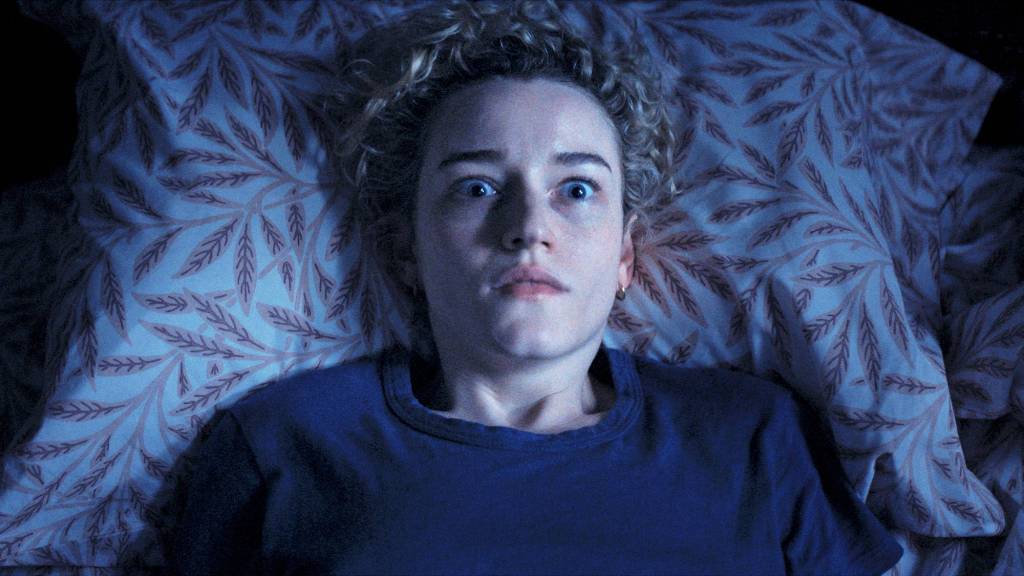
At 2:17 a.m. on a school night, 17 of Justine’s 18 students vanish — and somehow she becomes the prime suspect. That’s the chilling premise of Weapons, Zach Cregger’s follow‑up to Barbarian, and I’ll admit I wasn’t exactly eager to see it. Horror has never been my genre: too many clichés, too much gore, too little story. I’ve never quite understood the appeal of paying to be terrified.
Then Weapons made me understand.
If you’re going to be scared, it turns out the best place to do it is in a dark room surrounded by strangers who are just as tense as you are. Cregger structures the film like a horror‑tinged Pulp Fiction, weaving together multiple threads that slowly reveal their connections and build toward a revenge story you can’t help but cheer for.
Some say revenge is a dish best served cold, but Weapons taught me it’s best served communally — with a room full of supportive strangers who feel, for two hours, like friends. The film isn’t just a movie; it’s an experience, one that reminds you why people flock to theaters for a good scare in the first place.
6. BUGONIA
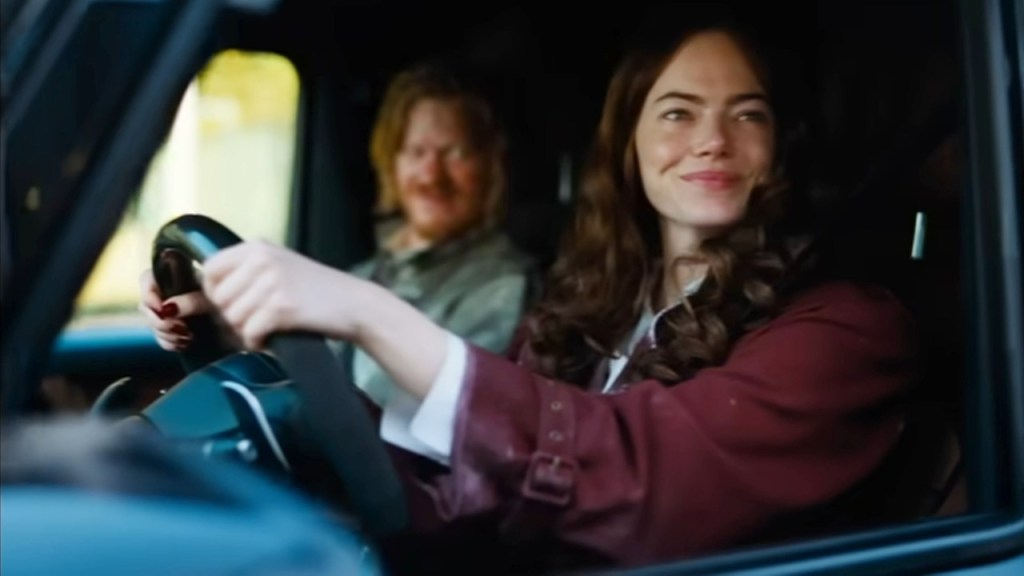
In an era saturated with algorithms designed to tell us exactly what we want to hear, it’s easier than ever to have our opinions validated. We let our biases steer the conversation, justifying why it’s acceptable to turn away from perspectives that challenge us. Yorgos Lanthimos’s Bugonia confronts that impulse head‑on. For a hundred minutes, it feeds us exactly what we want to believe — only to serve a full slice of humble pie in the final twenty. It’s a masterclass in perspective and it’s easily one of the most thought‑provoking works of the past year.
It’s no wonder Emma Stone keeps returning to collaborate with him. And it’s no surprise he keeps bringing her back — she’s one of the most versatile and daring actresses working today. Here, she delivers another standout performance as a successful CEO kidnapped by a conspiracy‑obsessed man and his dimwitted cousin. But there’s nothing dimwitted about Bugonia. It’s sharp, incisive, and unafraid to challenge the audience’s assumptions.
This is one of the smartest, most essential films of the year — a reminder that perspective is fragile, bias is seductive, and sometimes the stories we cling to say more about us than the world around us.
5. SENTIMENTAL VALUE
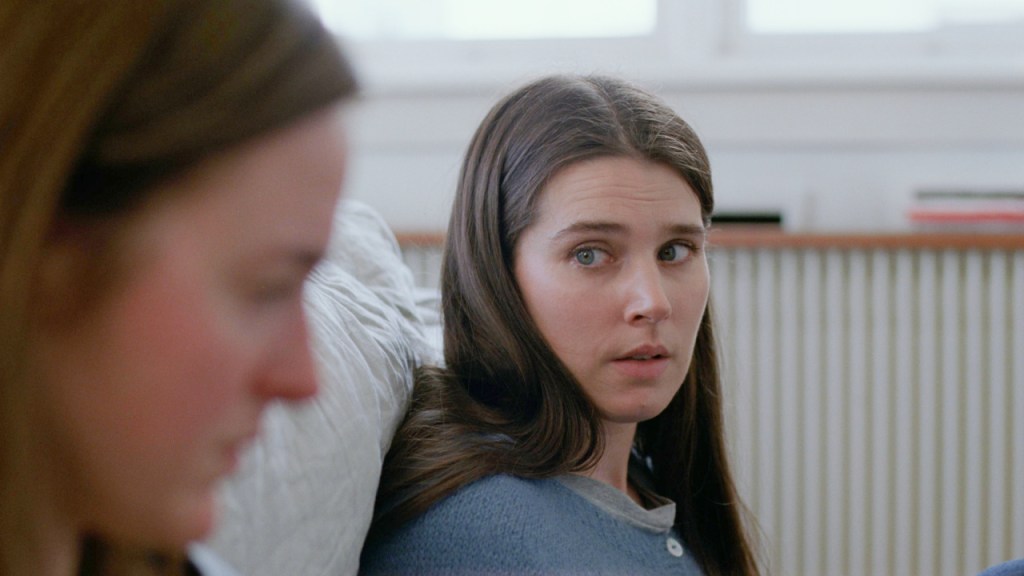
Every year, my top‑ten list seems to reveal a theme — a quiet reflection of the times we’re living in. And if this year’s films are any indication, people simply want to be seen. It’s no surprise, really. Children compete with their parents’ smartphones for attention, and adults seem too busy driving their kids to school and practices to have time to be noticed. Sentimental Value taps directly into that longing.
The film follows a thirty‑something actress still haunted by the absence of her father during her childhood. The damage lingers everywhere: in her romantic relationships, in her mental health, and in the emotional exhaustion she carries like a badge that’s impossible to hide. Ironically, the only places that pain seems to serve her are in her acting career as a stage and movie actress— and perhaps in her bond with her younger sister. A story like this is only as strong as its performances, but Sentimental Value boasts one of the best ensemble of the year. Renate Reinsve, Stellan Skarsgård, Inga Ibsdotter Lilleaas, and Elle Fanning all deliver work so layered and affecting that the film has a legitimate shot at four acting nominations when the Oscars are announced later this month. These are performances that don’t just ask to be seen — they demand it.
4. IT WAS JUST AN ACCIDENT

It’s not often that the highlight of a vacation is sitting in a dark room with a bunch of strangers, but that’s exactly what happened during my trip to Seattle last fall. But it wasn’t just any dark room — it was an independent theater screening Jafar Panahi’s It Was Just an Accident, one of the most unforgettable films of 2025.
It’s easy to praise Panahi’s bravery and the importance of his voice in global cinema, especially considering that the release of It Was Just an Accident resulted in a one‑year jail sentence for the Iranian filmmaker. But this ranking stands apart from all of that. On its own merits, the film is one of the funniest, most thrilling, and most intense moviegoing experiences of the year, from its gripping opening minutes to its final, unforgettable scene that uses sound so perfectly that it deserves an Oscar nomination alongside F1. Let’s hope Panahi is released quickly. Cinema needs his vision — now more than ever.
3. TRAIN DREAMS
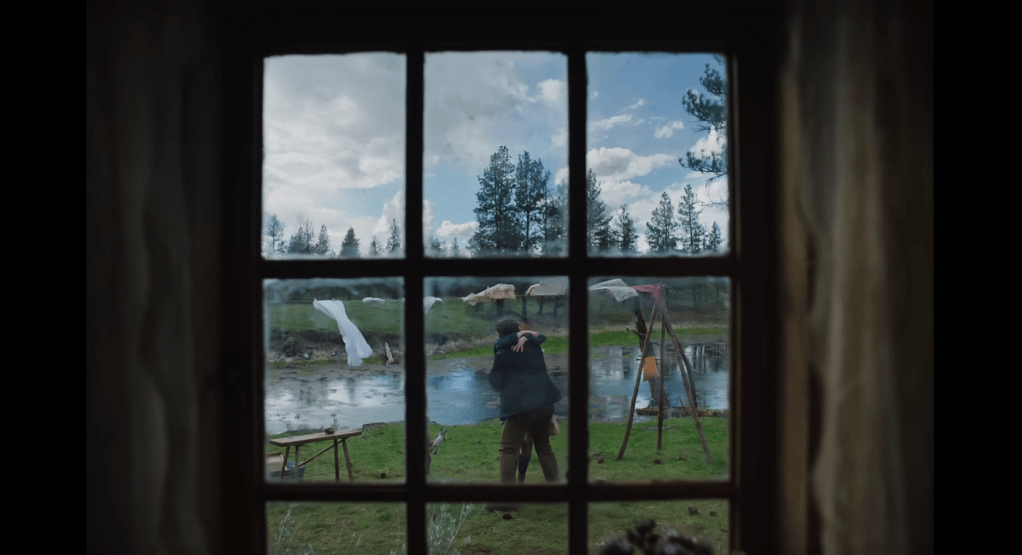
I know two things about my great‑grandfather: he was a lumberjack, and everyone loved his pancakes. In Train Dreams, Joel Edgerton delivers a beautifully subdued performance as Robert Grainer, a lumberjack not all that different from the man my grandma described. The work is grueling, the lifestyle unforgiving, yet Grainer pushes forward, determined to provide for his wife and young daughter.
The film unfolds with gorgeous cinematography and a narrative rhythm that feels almost too lifelike — echoes of Terrence Malick in its imagery and its quiet, contemplative soul. Train Dreams reminds us that a person’s story is always larger, deeper, and more complicated than it appears on the surface. Even when Grainer feels his life amounts to nothing, a neighbor gently reminds him that “the world needs a hermit in the woods as much as a preacher in the pulpit.” Likewise, we need films that tell the story of lumberjacks just as much as those focused on superheroes. Train Dreams may never match the box‑office success of films like Superman or Thunderbolts*, but it’s a small film with an enormous emotional footprint — one that lingers, resonates, and quietly reshapes the viewer. It certainly did for me.
2. ONE BATTLE AFTER ANOTHER
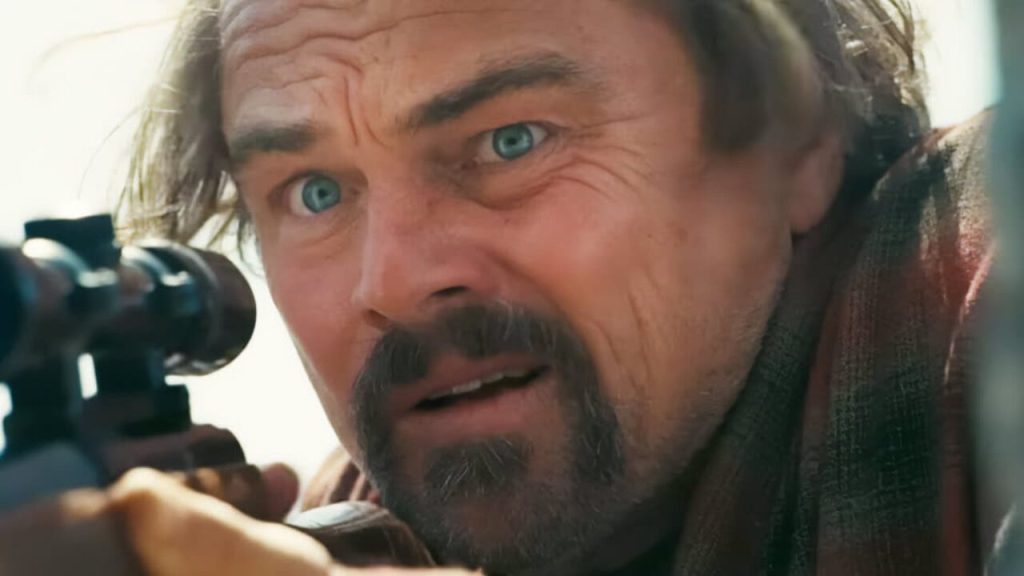
Maybe it was the towering IMAX screen, or the vibrating seats that rattled like live wires during the tensest moments. Maybe it was Jonny Greenwood’s thunderous score, cranked to 11 during the film’s now‑iconic chase sequences. Or maybe it was Michael Bauman’s cinematography, which builds suspense like Spielberg did in Jaws. More likely, it was all of the above — and then some — because something about my viewing of One Battle After Another elevated it above any thriller I’ve seen in years.
Its politics won’t be for everyone, but when Fox News feels compelled to publish a full article calling the film “an ill‑timed apologia for left‑wing violence,” you know you’re dealing with something that strikes a nerve. Plenty of movies try to stir emotions; this one actually succeeds, and with remarkable craft.
Is One Battle After Another politically biased? Probably. But it’s hard to care when the filmmaking is this sharp, this timely, and this essential. Besides, the film’s message isn’t that violence against the radical right is justified — it’s that the love of a father, and love in general, matters far more than any broken political system.
And up until Christmas Day, One Battle After Another may have been the best American film of the decade.
1. MARTY SUPREME

The last time I saw a Safdie brothers movie, the lead character’s brains were blown out in a pawn shop, and the last time I checked the A24 website, they were selling Marty Supreme Wheaties boxes. So, when I walked into the theater for Josh Safdie’s new film, I knew anything was possible. Anything except one thing: I didn’t think it was possible to see another 2025 release better than One Battle After Another. And for once, I’m grateful to be wrong.
That’s because Marty Supreme is a champion — the best sports movie since Raging Bull and the best American film of the last ten years. Timothée Chalamet plays Marty Mauser, a gifted ping‑pong prodigy whose life choices keep tripping over his talent. Fortunately, that’s not the case for Chalamet himself, who deserves to be mentioned in the same breath as Leonardo DiCaprio and Joaquin Phoenix as one of the finest actors working today.
But make no mistake: this is Josh Safdie’s film. He’s like a Marty Mauser behind the camera — except with far more control and command. Marty Supreme has received numerous comparisons to Spielberg’s Catch Me If You Can, and frankly, they undersell just how special this film is. If you must invoke Spielberg, say it has the suspense of Jaws, the intensity of Saving Private Ryan, or the magic of E.T. — because those films are much closer in quality. Someday, critics will be comparing future films to those of the Safdie brothers. And if a true masterpiece emerges, it might just earn comparisons to Marty Supreme.
 Entertainment Yearly